

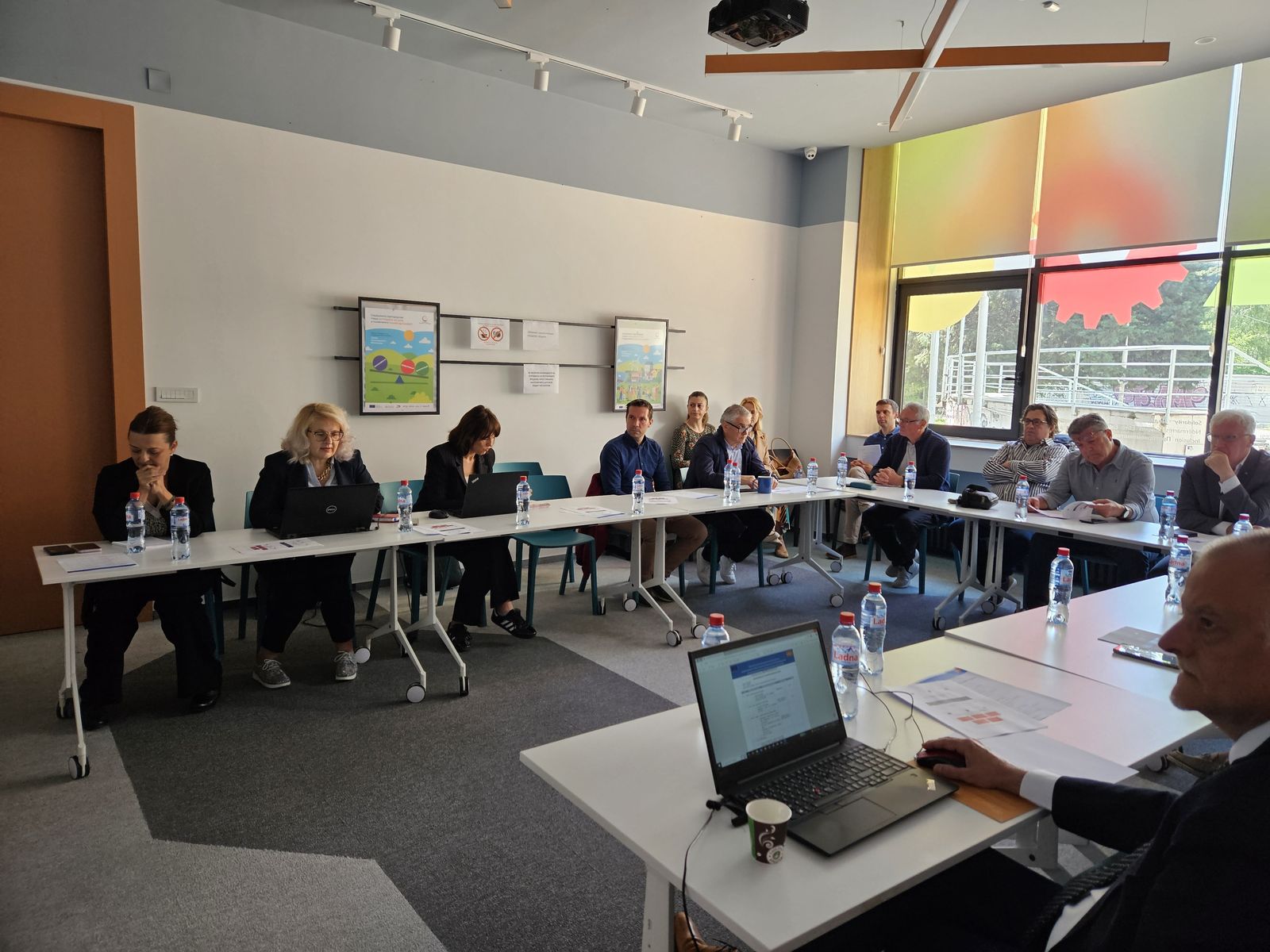
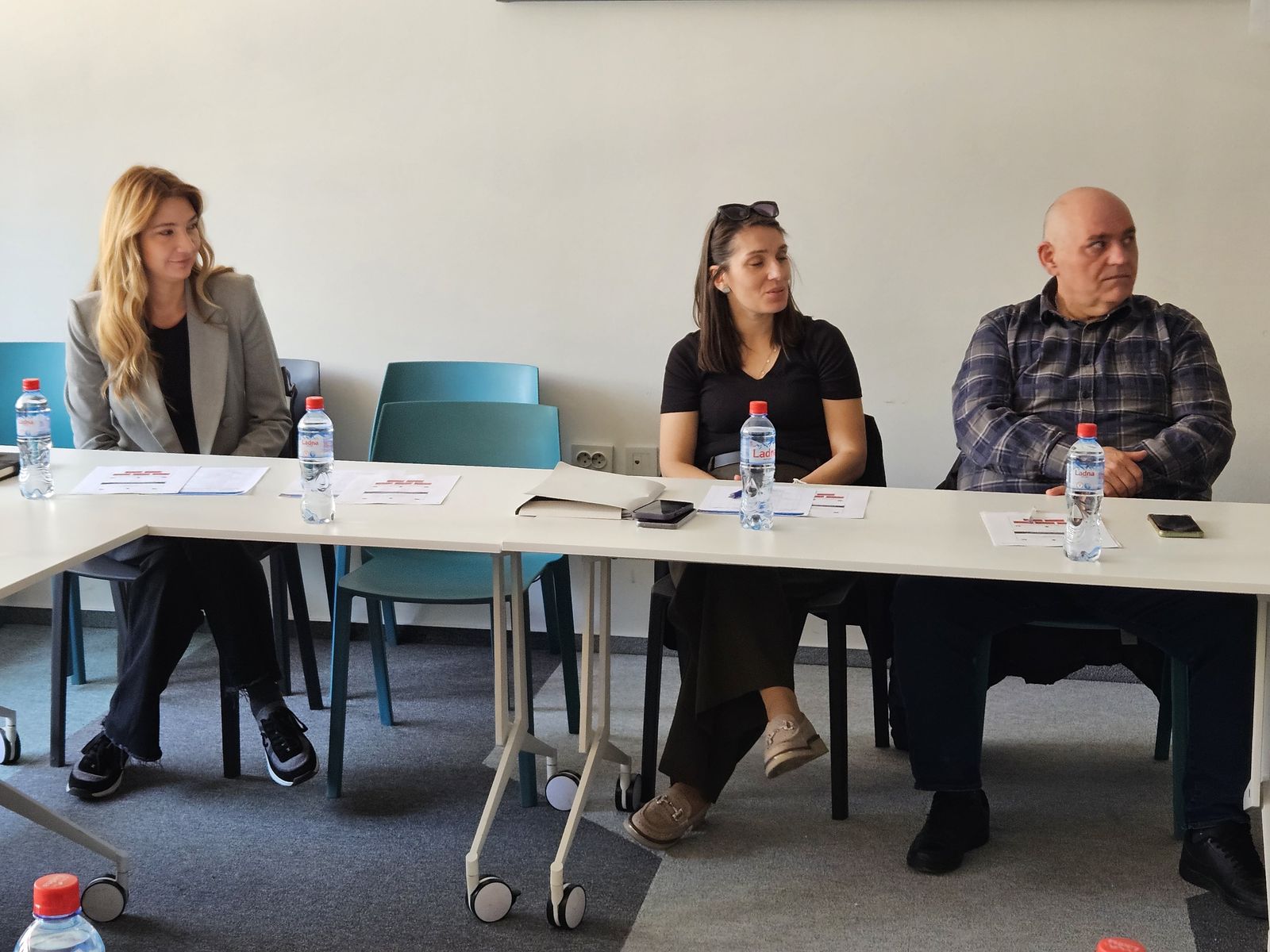
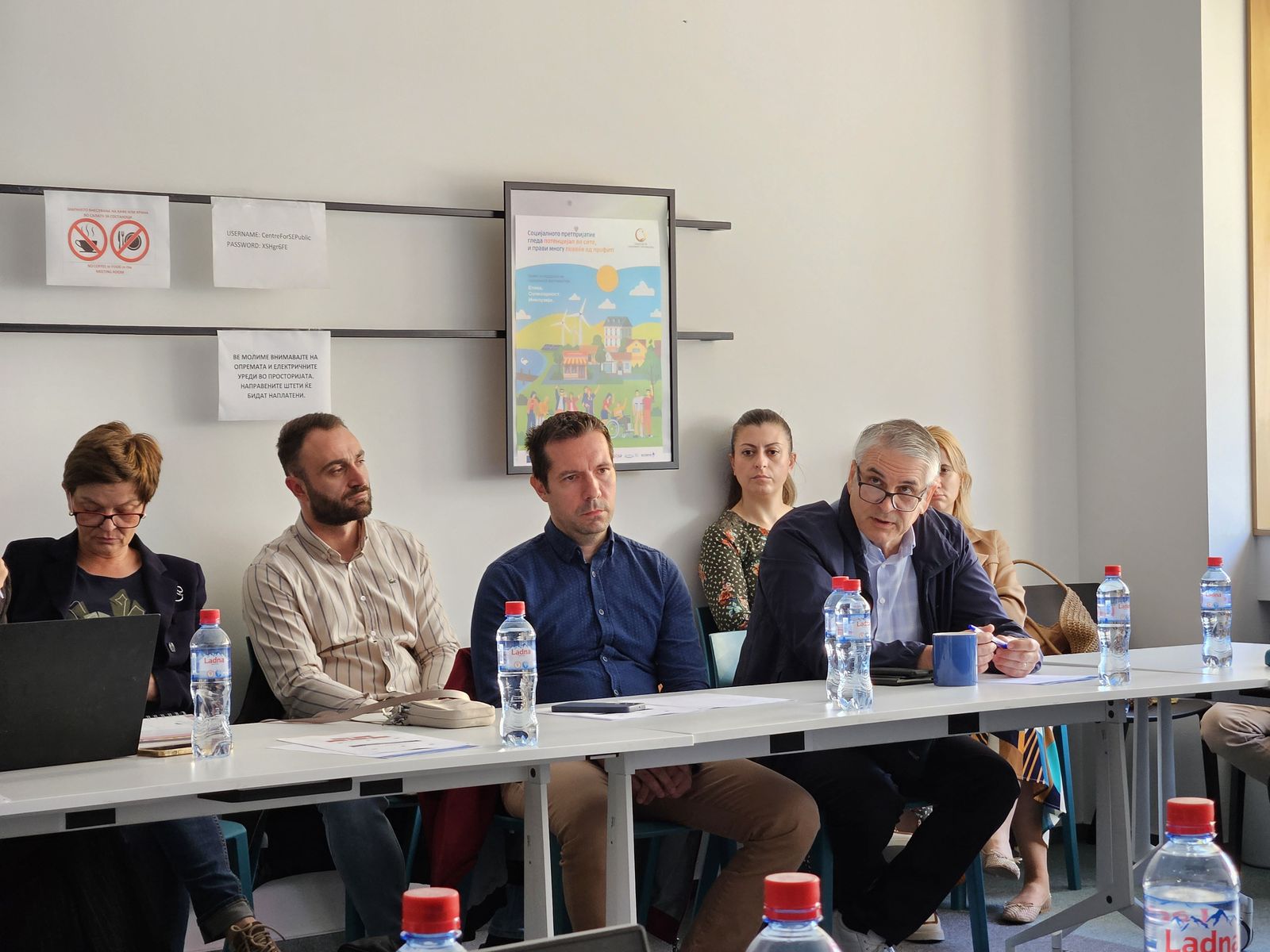
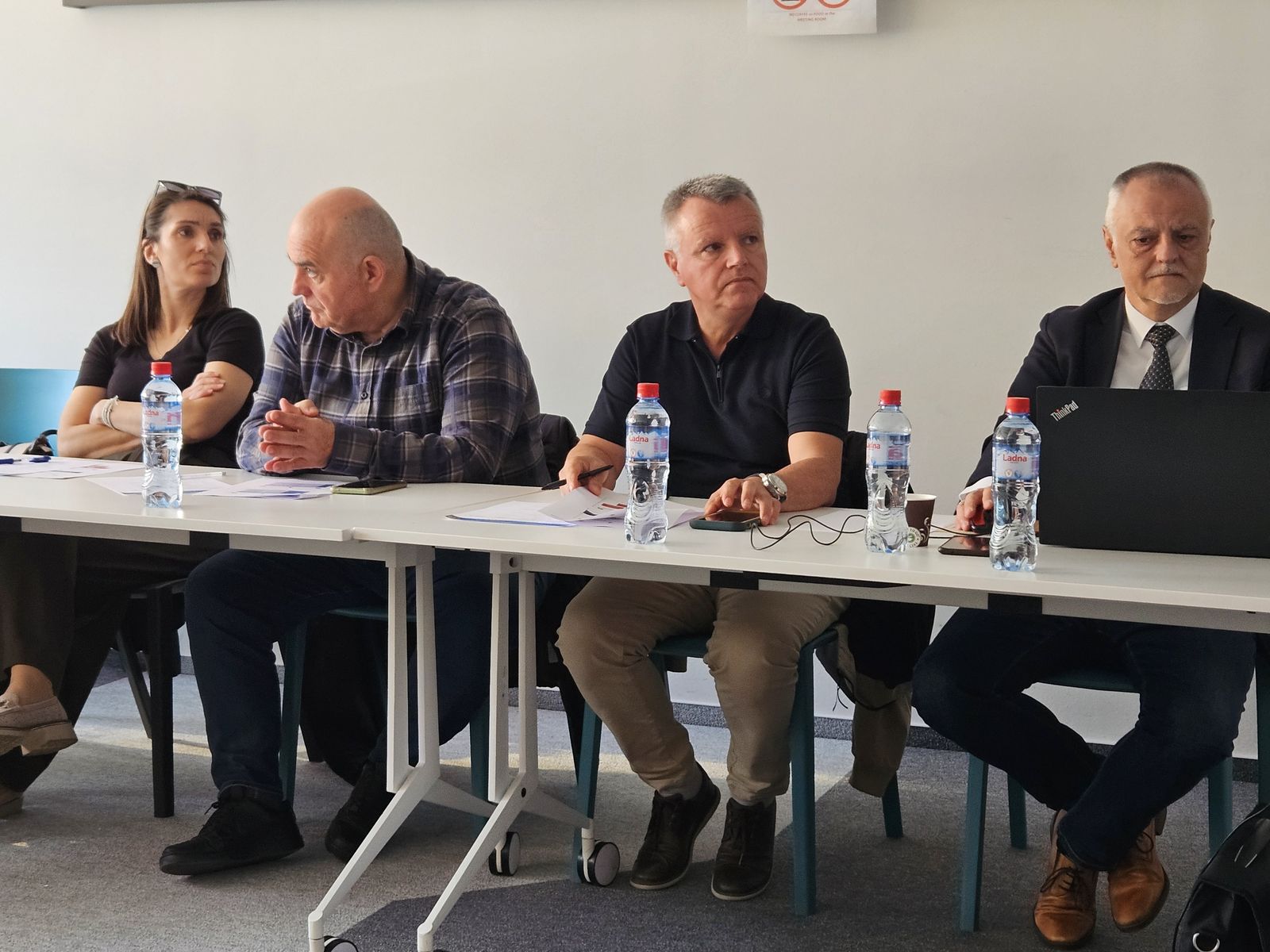
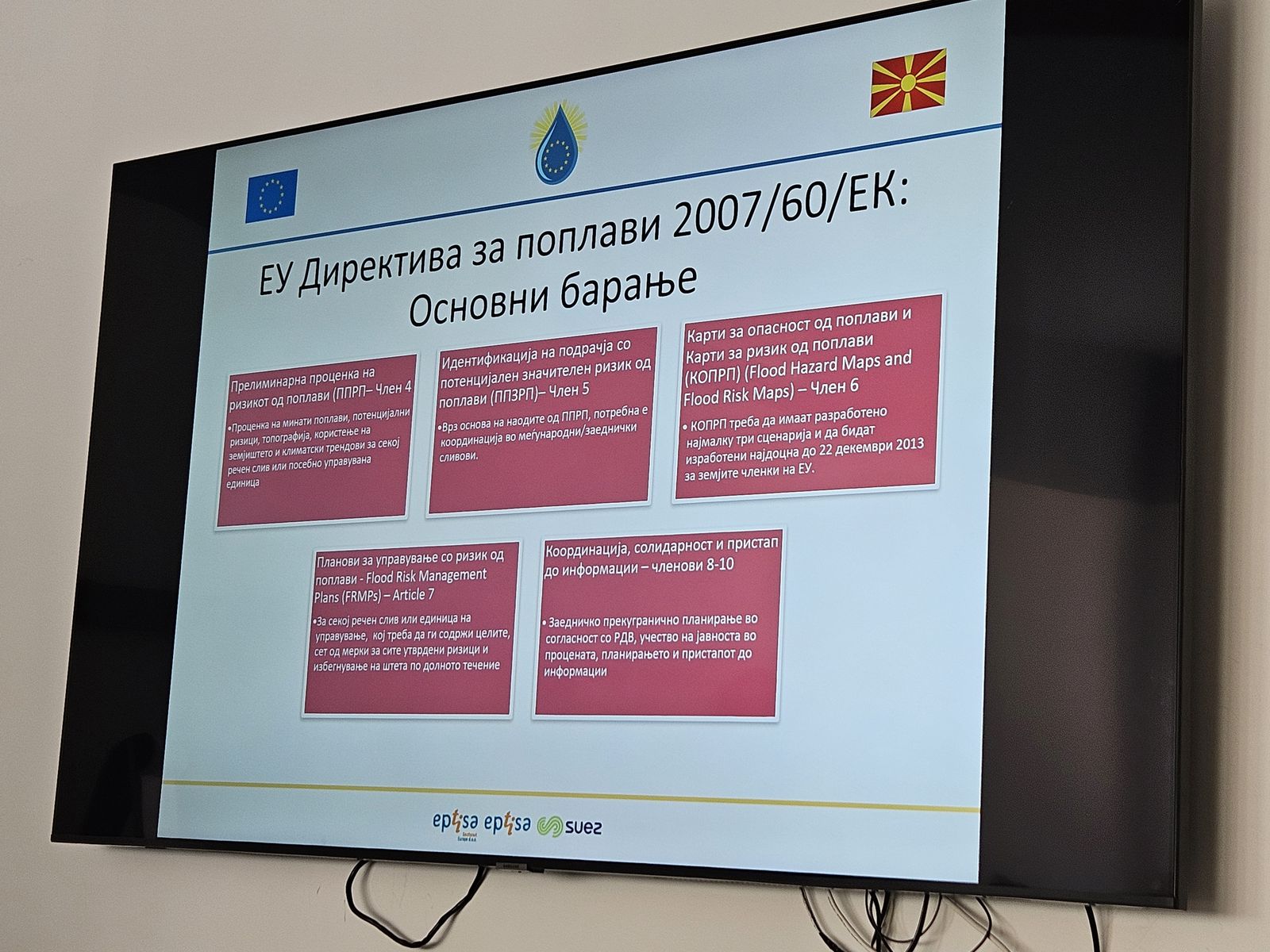
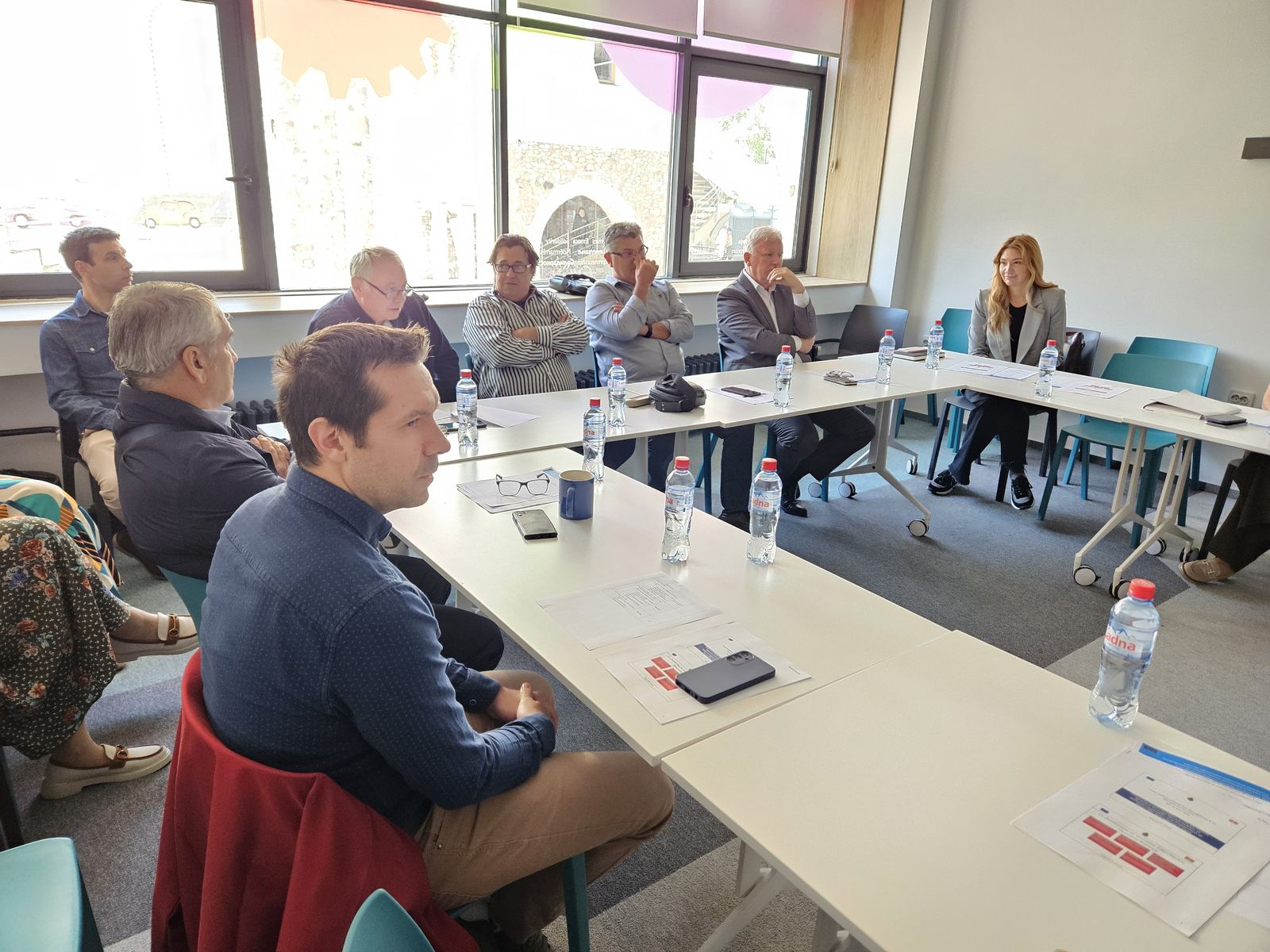
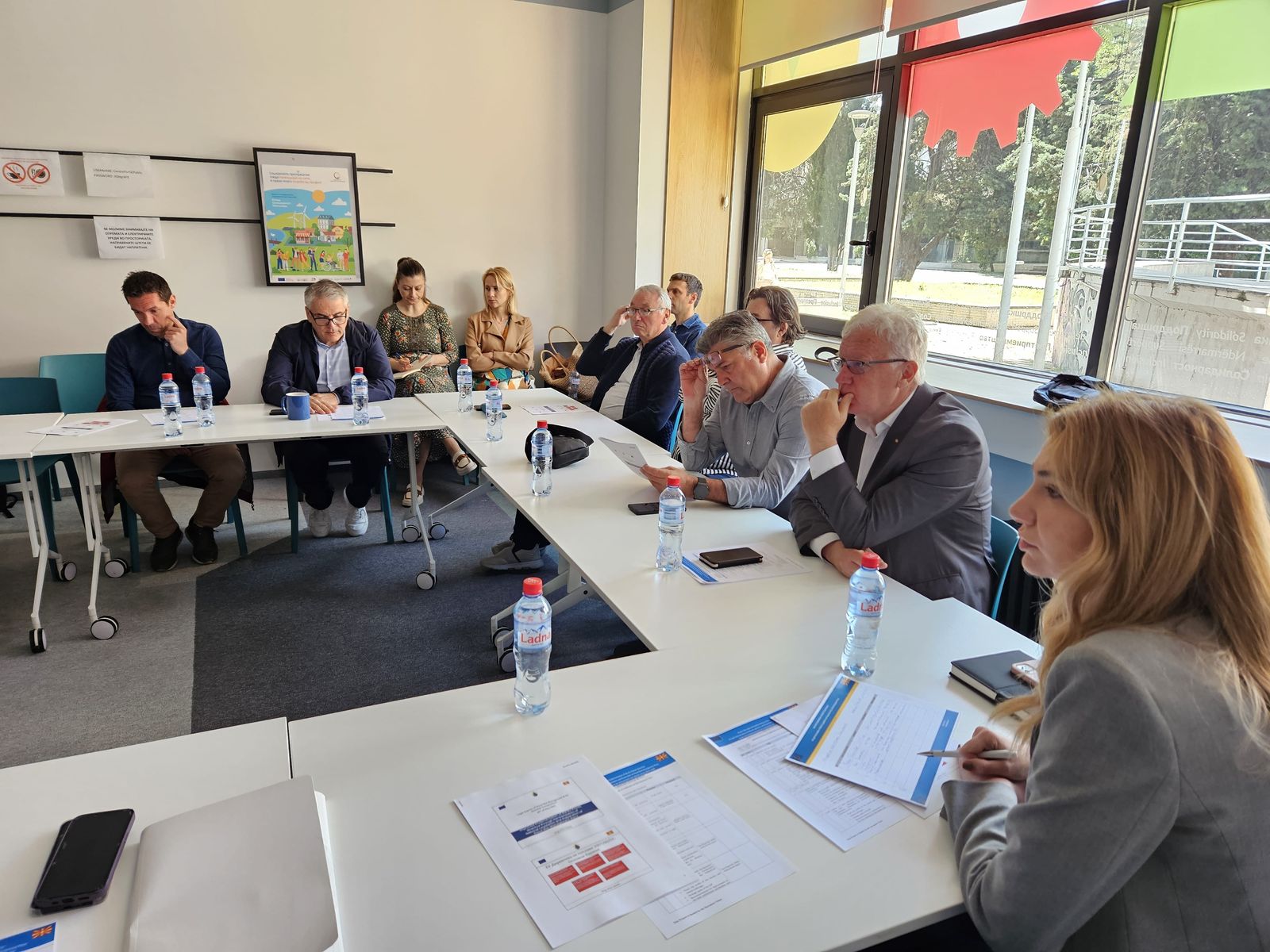
As part of the EU-funded project “Improved Implementation of the EU Floods Directive through Harmonization of National Legislation and Preparation of Flood Risk Management Plans”, the first national workshop titled “Legal Aspects of Flood Risk Management & EU Floods Directive Transposition, Draft Stakeholders Involvement and Public Participation Plan, and Draft Institutional Development Plan” was held at the Center for Social Enterprises in Skopje on May 20, 2025.
Organized under Activity 2 of the project, “Strengthening Administrative Capacities, Access to Information, and Public Outreach”, the workshop specifically supported Task 2.1 – Capacity Building of the Competent Authorities and Task 2.2 – Stakeholder Involvement and Public Participation. The workshop brought together 22 participants from relevant institutions and sectors involved in flood risk management, creating a platform for dialogue and knowledge exchange aimed at strengthening alignment with EU standards.
Facilitated by national experts Toni Popovski and Jadranka Ivanova, the workshop served as an opportunity to present key project milestones, including the first drafts of the Stakeholders Involvement and Public Participation Plan (SIPPP) and the Institutional Development Plan (IDP). The event featured a dynamic mix of expert presentations and interactive discussions, including a participatory SWOT analysis focused on institutional capacities and legal compliance.
Participants reviewed proposed steps for the transposition of the EU Floods Directive into the Law on Waters, with no significant comments raised. During discussions on stakeholder engagement, it was recommended that the SIPPP be expanded to include additional institutions such as the Agency for Real Estate Cadastre, the Agency for Spatial Planning, the Geological Survey Office, the State Statistical Office, the Ministry of Defence, and national public enterprises managing hydro systems (Lisiche, Zletovica, Strezevo, and Studenchica). Their mandates and relevance to flood risk management will be further analysed and integrated into the plan.
Stakeholders underscored the need to clarify the functions of the Administration for Hydro meteorological Works (AHMW) within existing platforms for flood-related data exchange and management. They also supported the recommendation to enhance coordination between the crisis management system and the water management system under the SIPPP framework.


The workshop also addressed challenges in human and financial resources. While financial limitations will be tackled in the Directive-Specific Implementation Plan (DSIP), the IDP will include measures to assess and address gaps in human resources. Regarding the integration of Flood Risk Management Plans (FRMPs), participants acknowledged two potential approaches based on EU best practices—either integrating them within River Basin/Sub-basin Management Plans or developing them as standalone documents.
An in-depth discussion was held on potential structures for improved inter-institutional coordination and flood data management. One scenario involves reforming the existing National Water Council into a dual-function advisory body, while another proposes the establishment of a dedicated National Council for Flood Risk Management. Additionally, it was recommended that the analysis of data exchange platforms be accompanied by a process diagram and detailed scenarios for more efficient flood data governance. These scenarios will be reviewed by Designated Group 1 prior to finalizing the IDP.
Participants endorsed the proposed objectives of the Institutional Development Plan and recognized the importance of strengthening early warning systems, developing detailed flood hazard and risk maps, improving FRMPs, and rehabilitating critical infrastructure. Emphasis was placed on ensuring inclusive planning processes that address the needs of vulnerable groups and communities.
Key institutional challenges identified during the workshop included limited coordination among institutions, lack of multidisciplinary expertise, insufficient public participation, and weak integration of flood risk management into spatial and urban planning. Participants highlighted the vital role of municipalities and expressed strong support for encouraging inter-municipal cooperation in water and flood risk management.
Finally, the Institutional Capacity Building Plan, including a phased Training Plan, was well received. The approach and objectives were accepted, with further consultations planned to determine the number of training days to be implemented during the project, as well as the scope of post-project training activities and modules to be developed.
This workshop marked a significant step forward in building a coordinated, inclusive, and legally sound framework for flood risk management in North Macedonia. It reaffirmed the shared commitment of institutions and experts to align national practices with the EU Floods Directive and enhance the country’s resilience to flood-related risks.
Download the workshop presentations: