

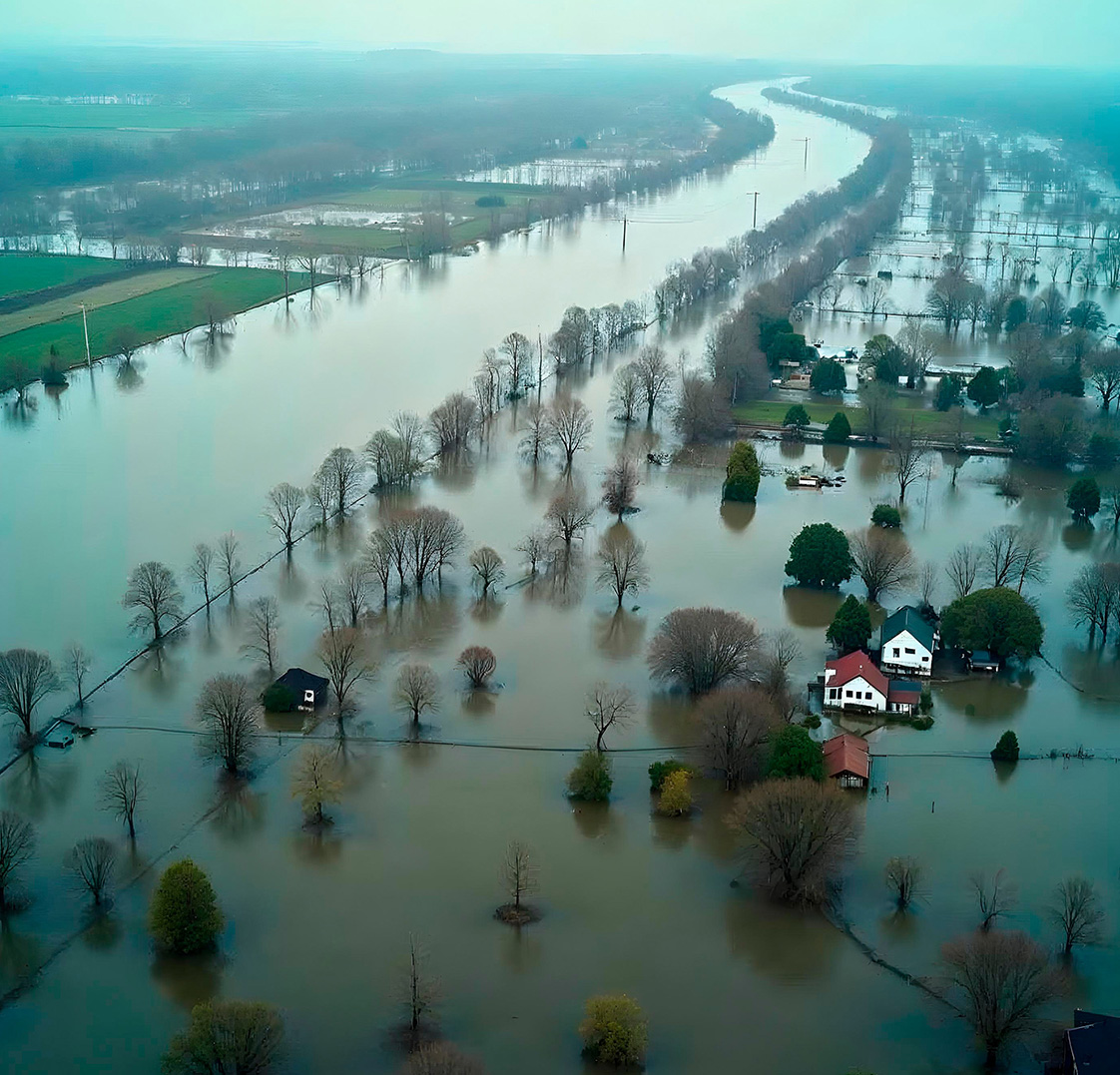
Eptisa, together with its consortium partners, has officially begun the implementation of the IPA-funded project “Improved Implementation of the EU Floods Directive through Harmonization of National Legislation and Preparation of Flood Risk Management Plans”. This 30-month initiative, funded by the European Union through the Central Financing and Contracting Department (CFCD) of the Ministry of Finance, aims to enhance flood resilience in North Macedonia by aligning national legislation with the EU Floods Directive and building the foundations for its effective application.
The overarching goal of the project is to increase environmental protection and safeguard human life, health, and property from the growing risks associated with floods. This will be achieved through legislative harmonization, institutional strengthening, improved risk assessment methodologies, and active public engagement in flood risk planning.
A key focus of the project is to ensure the full transposition of the EU Floods Directive into national legislation. To this end, the project will support the review and amendment of existing legal frameworks, including aligning the Law on Waters with EU requirements. At least eight secondary legal acts essential for full compliance will be drafted. In addition, a Directive-Specific Implementation Plan (DSIP) will be developed to provide a clear roadmap for putting the Directive into practice, detailing the necessary actions, responsible institutions, and implementation timelines.
The project also places a strong emphasis on institutional capacity. An in-depth evaluation of the ability of relevant institutions to implement and enforce the EU Floods Directive will be conducted. Based on this assessment, an Institutional Development Plan will be prepared, recommending practical steps to strengthen coordination, enhance skills, and address resource gaps. Capacity-building efforts will include targeted training sessions, workshops, and study visits to EU Member States to exchange knowledge and best practices.
Public participation is another cornerstone of the project. Extensive consultations will be organized during the development and approval of Flood Risk Management Plans (FRMPs), ensuring transparency and inclusive decision-making. The public and stakeholders will be actively involved through awareness campaigns, outreach activities, and educational materials explaining the importance of flood risk management and encouraging input into the planning process.
In parallel, the project will advance technical and scientific aspects of flood risk management. A comprehensive methodology for assessing flood risks will be developed, along with a gap analysis of existing flood risk reports. Six new Preliminary Flood Risk Assessments (PFRAs) will be prepared for selected river sub-basins, while four existing PFRAs will be revised to meet EU standards. Ten hydrological and hydraulic models will be created to simulate water flow and flood scenarios. These will inform the production of detailed Flood Hazard and Flood Risk Maps, which will be integrated into the country’s environmental and water information systems.
Recognizing the growing threat of geo-hazards, the project will also address landslides and torrential floods. A scientific methodology for assessing such risks will be developed, supported by GIS-based mapping of vulnerable areas. A comprehensive catalogue of risk reduction measures will be prepared, offering both structural solutions—such as retaining walls—and nature-based approaches like reforestation. Practical guidelines will be published to ensure future infrastructure is planned and constructed to minimize exposure to these hazards.
Environmental considerations are integral to the project. Strategic Environmental Assessment (SEA) Reports will be drafted for each of the ten river sub-basins, evaluating the potential environmental impacts of proposed flood risk management measures.
To improve early detection and response, the project will also assess the current state of meteorological and hydrological monitoring, as well as the existing Flood Early Warning System (FEWS). A strategic plan will be developed to expand monitoring networks, upgrade equipment, and enhance data accuracy. Furthermore, a detailed plan for implementing or upgrading the FEWS will be prepared, including step-by-step operational procedures for authorities to ensure timely alerts and effective flood response.
This ambitious project is a vital step toward enhancing North Macedonia’s resilience to floods, aligning national practices with EU standards, and building long-term capacity to protect communities and ecosystems from the devastating impacts of climate-related disasters. The Ministry of Environment and Physical Planning (MoEPP) is the final beneficiary of the project and will lead the effort in coordination with other national and local institutions.