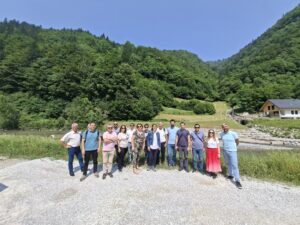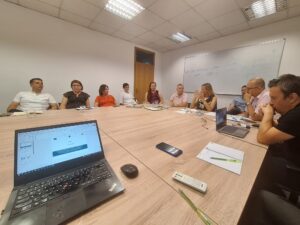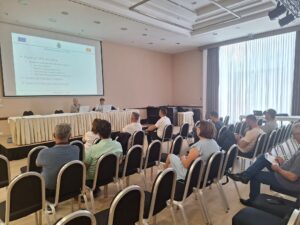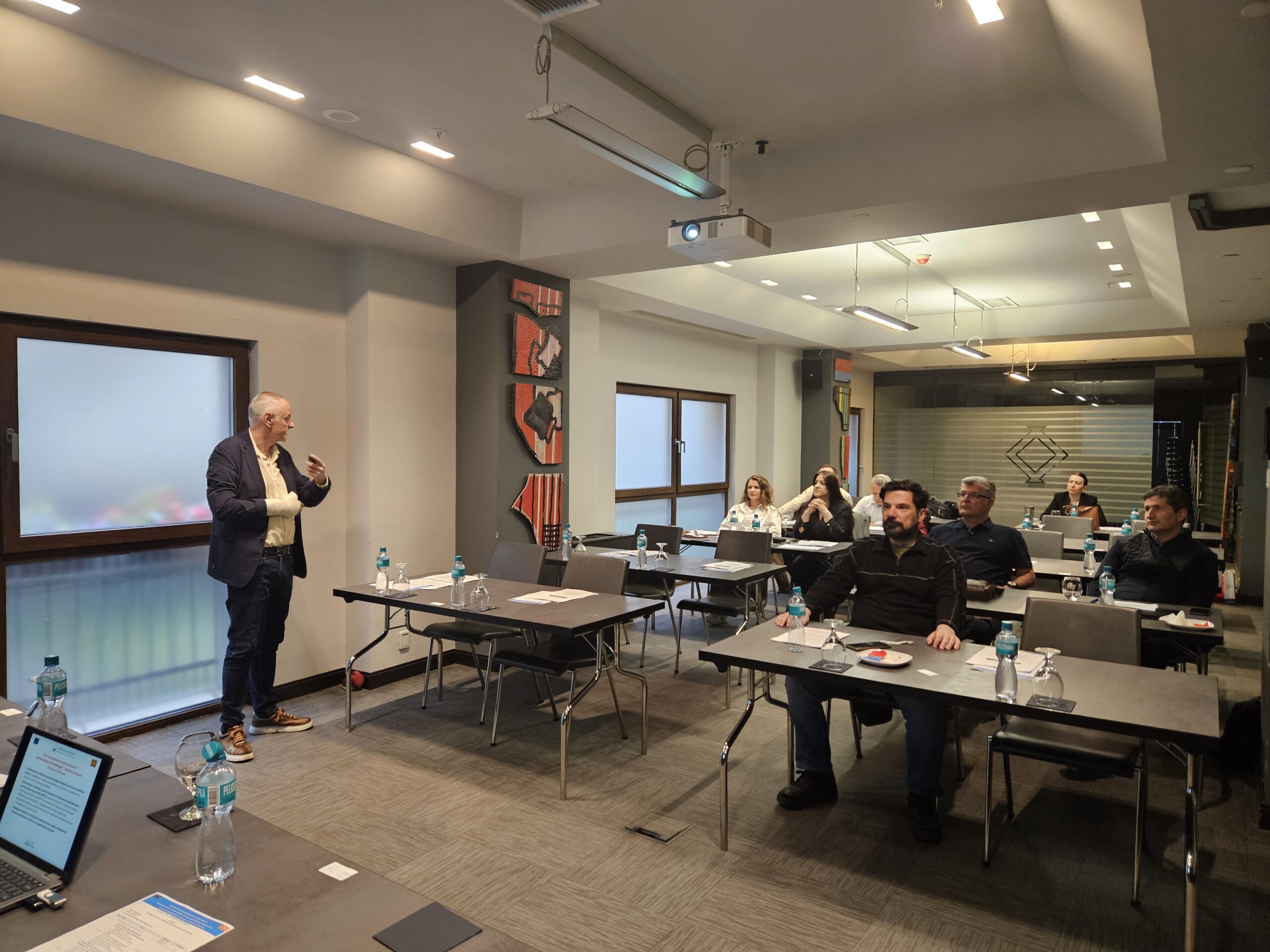

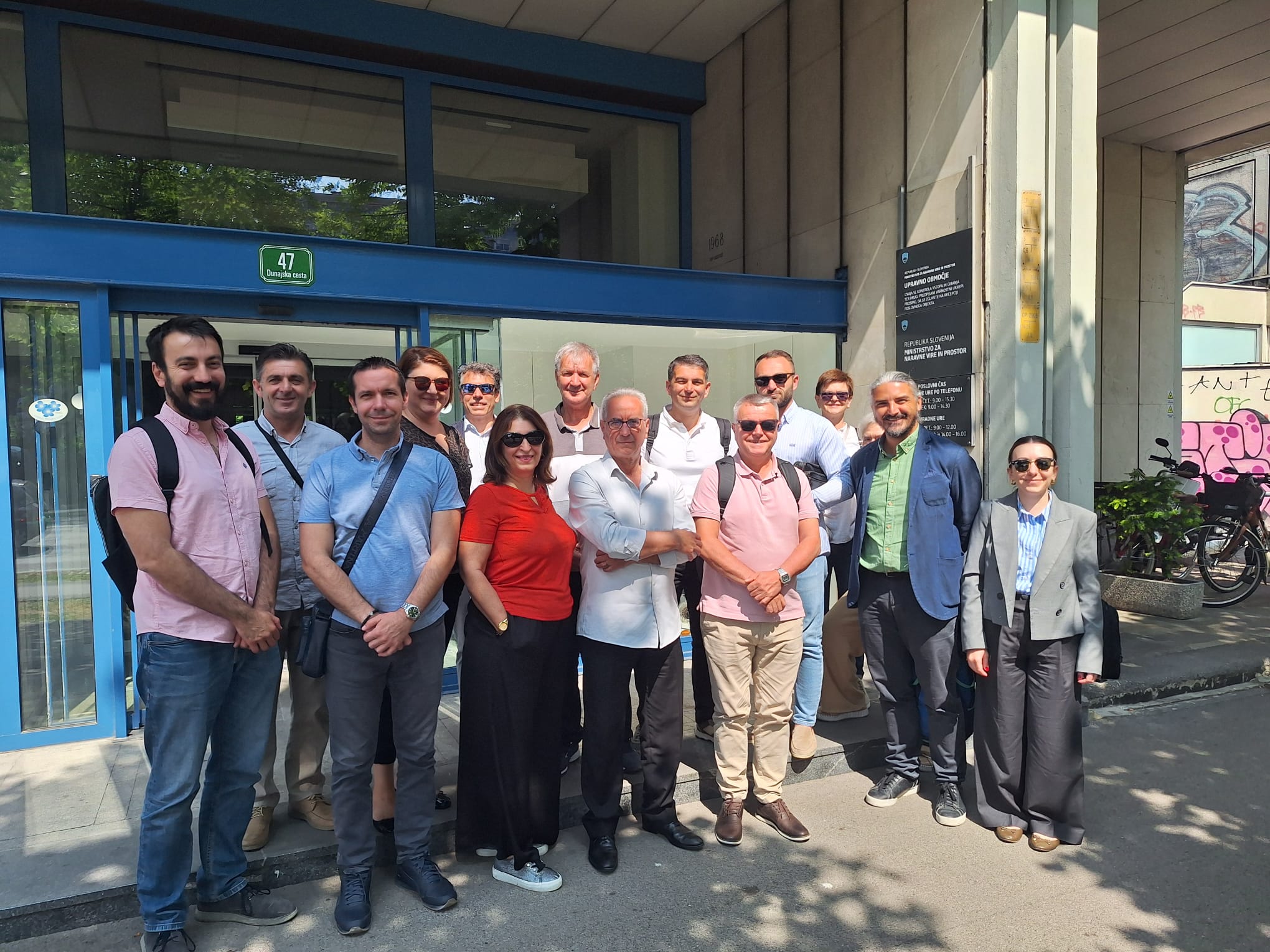
In mid-June 2025, representatives from institutions in North Macedonia participated in a study visit to Slovenia to exchange experiences and learn about EU best practices in flood management. The visit was organized within the framework of the project “Improved Implementation of the EU Floods Directive through Harmonization of National Legislation and Preparation of Flood Risk Management Plans.” The main objectives of the visit were to exchange experiences on the approximation of the EU Floods Directive, explore the setup of effective flood management systems, and discuss the utilization of available funds for flood risk reduction and recovery.
Slovenia was selected for this study visit as a relatively recent EU member state, with a background in flood management similar to that of North Macedonia. In addition to comparable geography, population size, and terrain, Slovenia experienced severe floods in 2023, which brought renewed focus on strengthening flood management systems, improving resilience, and managing post-flood recovery.
The North Macedonian delegation included representatives from the Ministry of Environment and Physical Planning, the Centre for Crisis Management, JSC Water Management, the Hydro-Meteorological Service, and members of the project team. From 8 to 13 June 2025, the delegation visited several institutions and sites and held meetings with Slovenian experts.
Key highlights of the visit included:
- Administration of the Republic of Slovenia for Civil Protection and Disaster Relief (Ministry of Defence):
The delegation learned about Slovenia’s comprehensive system for disaster protection and relief, which includes managing natural and other disasters, providing assistance to affected communities, damage assessment, fire protection, and post-disaster remediation. The Administration coordinates with the Slovenian Armed Forces, police, and other relevant bodies and leads Slovenia’s international cooperation in disaster response. Officials shared their experiences and lessons learned from the catastrophic floods of August 2023. - Institute for Hydraulic Research (IHR):
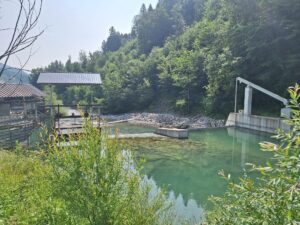
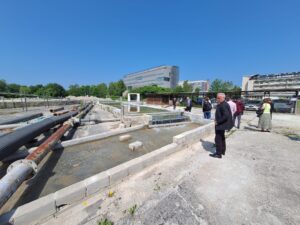
The delegation met with Ms. Tanja Prešeren, Director, and Mr. Jurij Mlačnik, Development Associate. The Institute specializes in hydraulic modelling (both physical and numerical), flood hazard and risk mapping, and interdisciplinary research. They also showcased their work on flood protection infrastructure, such as the Suša River dam in Železniki. A site tour presented several physical models used in their research and consultancy. - Faculty of Civil and Geodetic Engineering:
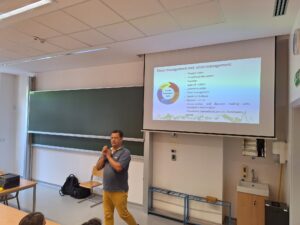
Professor Primož Banovec introduced the delegation to the EU’s common approach to flood management, including the EU INSPIRE directive and the integration of various registries supporting risk and crisis management. Slovenia’s central registries include public infrastructure, buildings (linked to LIDAR DTM), land cadastre, population data, flood hazard zones, water permits, and drinking water protection areas. The discussions emphasized flood hazard modelling and the impacts of climate change. - Field Visit to Železniki:
Led by Ms. Karolina Korenchan from the Water Agency of Slovenia, the group visited flood mitigation measures implemented along the Selska Sora River, observing practical examples of flood prevention infrastructure. - Water Directorate at the Ministry of Natural Resources and Spatial Planning:
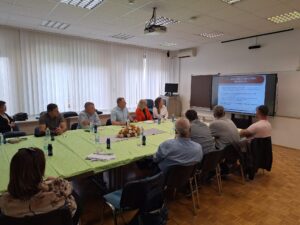
The Directorate presented Slovenia’s institutional framework for flood management, its legislative and policy measures, and the steps taken to strengthen resilience and improve flood risk management following the 2023 floods.
Through this visit, the North Macedonian delegation gained valuable insights into the organization, strategies, and practices Slovenia has adopted to enhance flood resilience and align with EU standards.